
Every business property should have a fire extinguisher installed but with so many to choose from, how do you know which you need? Commercial and public companies usually have a survey performed to decide what extinguisher type they need and how many are needed. There are multiple considerations when choosing a fire extinguisher for your property, including fire ratings, location points, maintenance and one of the most important, the type of extinguisher required based on the most likely category of fire you may encounter at your premises.
Most of us know fire extinguishers to be red however, many of us miss that there is a colour band round the top which designates the type of extinguisher it is and what it should be used for. Typically, combustion is a chemical reaction, when fuel reacts with oxygen and therefore releases heat. The fuel can be any substance, including wood, oil, paper etc. and the oxygen available will keep it burning for longer. Due to this reaction it’s important that you know which type of extinguisher you need to be able to safely put out the fire.
So what colour fire extinguisher do you need? Let’s look at the extinguisher codes and the types they represent:
Red = Water

One of the most common fire extinguisher colour codes is Red and this is used for Class A materials which include combustible elements, such as wood, paper, cloth, textiles and fabric. Obviously this can be ideal for office environments or other commercial properties, however, historically it has been recommended not to use Red code extinguishers for electrical fires for fear of running the risk of electric shock. However, in the last few years, manufacturers have developed water spray and water with additive extinguishers, many of which have passed a 35kv conductivity test meaning they are classed as safe for use on small fires involving electrical appliances. Environmentally friendly and effective in many scenarios, a water extinguisher helps prevent reignition.
Cream = Foam

Cream is included in the fire classes A and B. It is a foam extinguisher designed for use on flammable liquid fires such as fuel, oil, and solvents together with solids including wood.The foam medium smothers the source of the fire which removes oxygen – a key element required for the fire to burn. Typically, you will find a Foam extinguisher in workshops, garages and beauty salons where flammable liquids are frequently used and stored.
White & Red = Mist
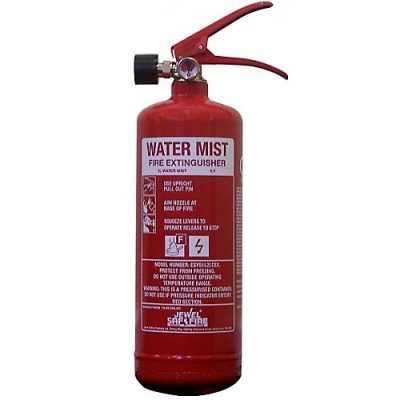
Water mist extinguishers are multi purpose and are suitable for A, F, B and C categories. They offer an effective protection against fires and helps cool the source. The revolutionary mist technology effectively evaporates, reducing oxygen and putting an end to the fire burn. Due to the de-ionised water, the water mist extinguishers leave barely any residue and are classed as a clean agent. They are used on wood fires, gas fires and electrical fires.
Yellow = Wet Chemical

Wet Chemical extinguishers are effective for fighting kitchen fires involving cooking oils and fats, including butter, oil and lard. They are recommended for commercial kitchens and mobile catering vans where the use of deep fat fryers pose a significant risk. Wet Chemical can also be used to fight class A fires such as paper and wood but they shouldn’t be used on wood fires.
Black = Carbon Dioxide

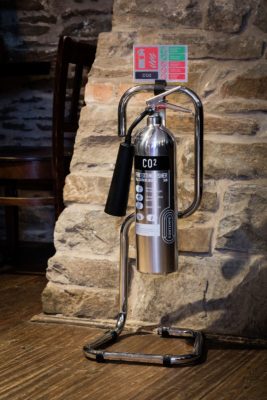
Carbon dioxide,or Co2 extinguishers as they are more commonly referred to, are mainly used on electrical fires but can also be installed for protection against on class B fires to provide effective relief on flammable liquids such as petrol and solvents. This popular type of extinguisher can be identified by a black band.They contain carbon dioxide in liquid form, which neutralises the oxygen which should stop the fire. They can be used in offices and many workplaces where there is a substantial amount of electrical and computer equipment. They should never be used on cooking fat fires or cooking oils. Additionally, many fire risk assessors will recommend a Co2 extinguisher for boiler rooms.
Blue = Dry Powder

Although dry powder extinguishers were used for a range of fire types including wood, paper and electrical fires, in 2012, the British Standard was revised and Powder extinguishers should only be used outdoors unless a Fire Risk Assessor specifically states powder for indoors, due to the unknown health/breathing conditions of building users.
Choosing A Fire Extinguisher & Where to Locate Them
There are many options to choose from and the colour codes (as seen above) are necessary to identify the various fires which may need fighting and it’s important you have the right one available on your premises.
For general home use, if you were so inclined to have an extinguisher, the water mist unit may be the best option. Generally, approved fire companies will carry out surveys on your business property to identify which extinguisher types and how many you need. They’ll also decide on where the best locations on your property are to store them. There are however, some key areas where they should be located:
- Fire points – They should be located on escape routes
- Easily seen – They should always be easily visible to all staff, so avoid fixing them in cupboards and behind doors
- Within Reach – Although they should be stowed as clearly as possible, they must be within easy reach of obvious fire risk locations
- Avoid Dangerous points – They should not be stowed in locations where there are immediate dangers, such as over hot stoves or heaters
- Appropriate Height – All extinguishers should be fixed to an elevated height – 1m from the floor to handle and 1.5m for smaller extinguishers
We see extinguishers everywhere, whether we’re shopping or working and it’s important to make sure the right units are housed correctly for the right environment. Schools for instance will primarily have red band extinguishers (Water) which are suitable for paper, wood and fabrics, often found across educational buildings and campuses. Kitchens and catering facilities will of course most likely require Yellow band extinguishers (wet chemical) in order to fight oil and fat fires. One of the most common of course is Black (Co2) which as stated above, will fight electrical and computer-related fires often prominent in office environments.
Fire Extinguisher Maintenance
It’s important to have the right extinguisher for your business but it’s just as important to ensure they are maintained on a regular basis. Maintenance is key and it’s vital that they are checked for pressure loss or any signs of damage. Water, foam and powder extinguishers should be discharged and refilled every five years but manufacturers and installers will guide you on the basics of keeping them in good condition, where to place them and who to call if you have any concerns.
Yearly servicing is recommended but after partial use they will need refilling.
Training
It’s highly recommended that as a business with fire extinguishers installed, that training is applied. Installation, maintenance and servicing and guidance is advised but training is worthwhile to ensure that your staff know how to properly use the extinguishers should the need arise. Ideally all businesses should engage with certification training and ensure that their staff are comfortable using the equipment in an emergency.
Signage

ID signage tells the user what types of fire the extinguisher can be used on safely. Signs should be fixed to the wall just above the extinguisher. We can see various signage related to fire safety in almost any building, whether it’s retail, industrial or public. They are used across schools, theatres, colleges, retail buildings, churches and oublic facilities, among many others and you will probably take them for granted and see them everywhere without really looking but they are vital for when there is an emergency.